

The Case for Huntington Lake: A Camping Guide
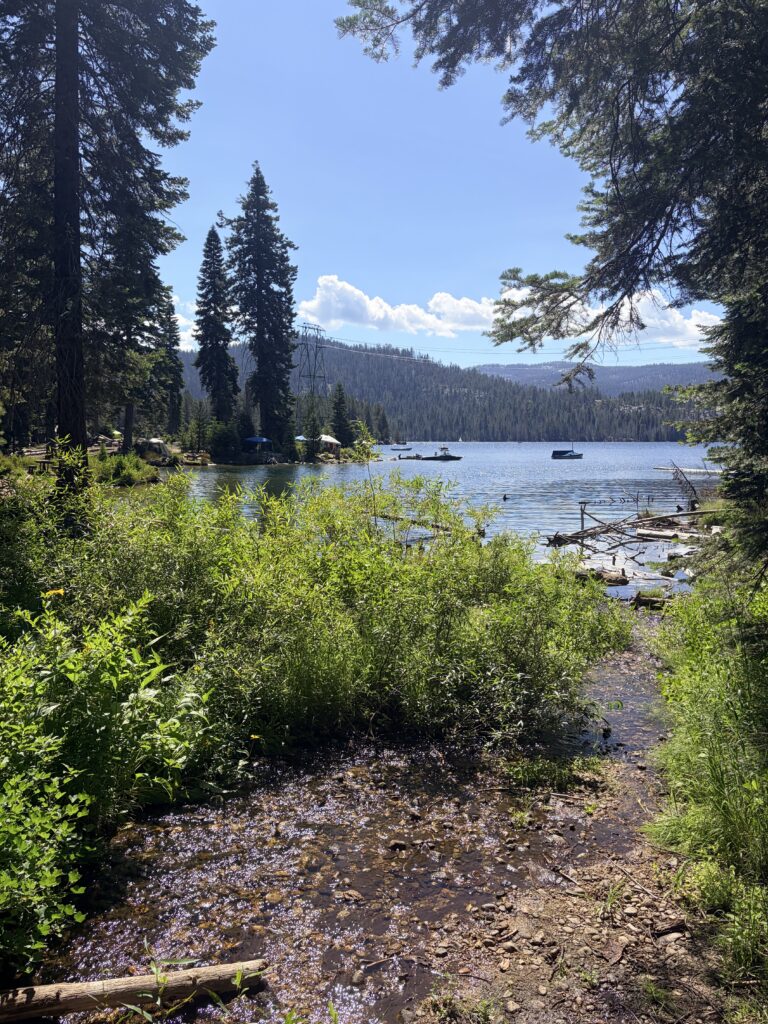
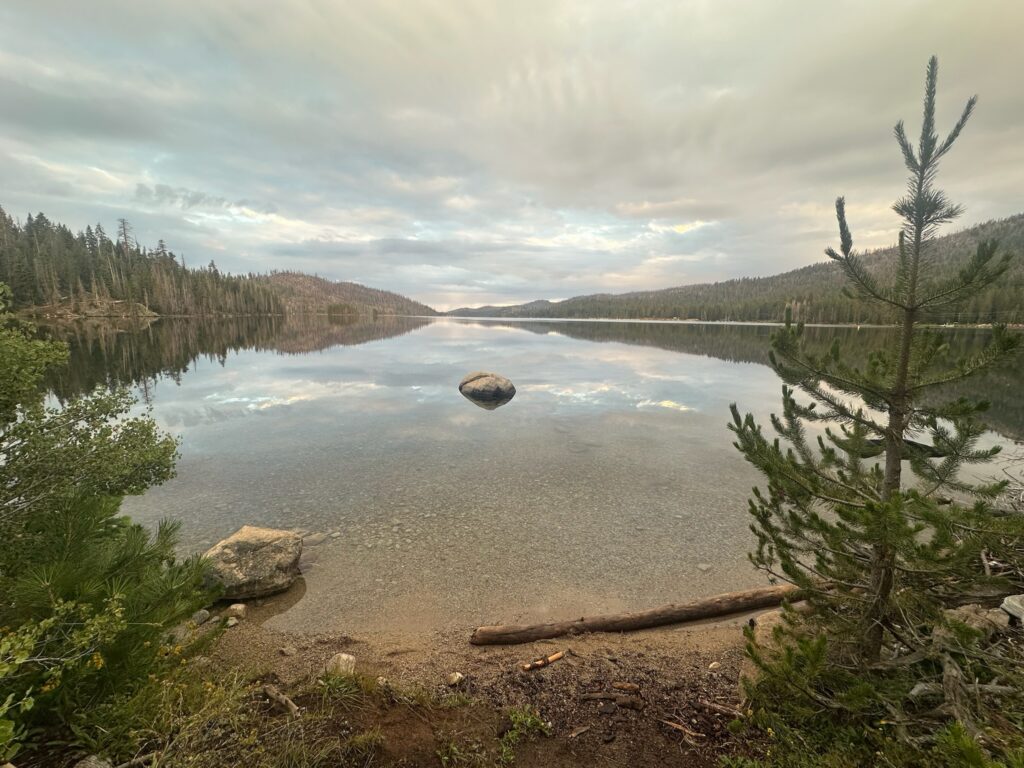
There’s a particular kind of magic to a lake that sits at 7,000 feet, ringed by granite and pine, cold enough to remind you you’re alive the second you dive in (and boy is it chilly). Huntington Lake, tucked into the Sierra National Forest above Fresno, is that lake. It’s not glamorous. The bathrooms are vault toilets more often than not, the road up has approximately one passing lane, and you will, at some point, forget to pack a damn lighter. But it’s the kind of place that makes you want to plan the next trip before you’ve even left the first one!!
Here’s what to know before you go.
Getting in and Setting up Camp
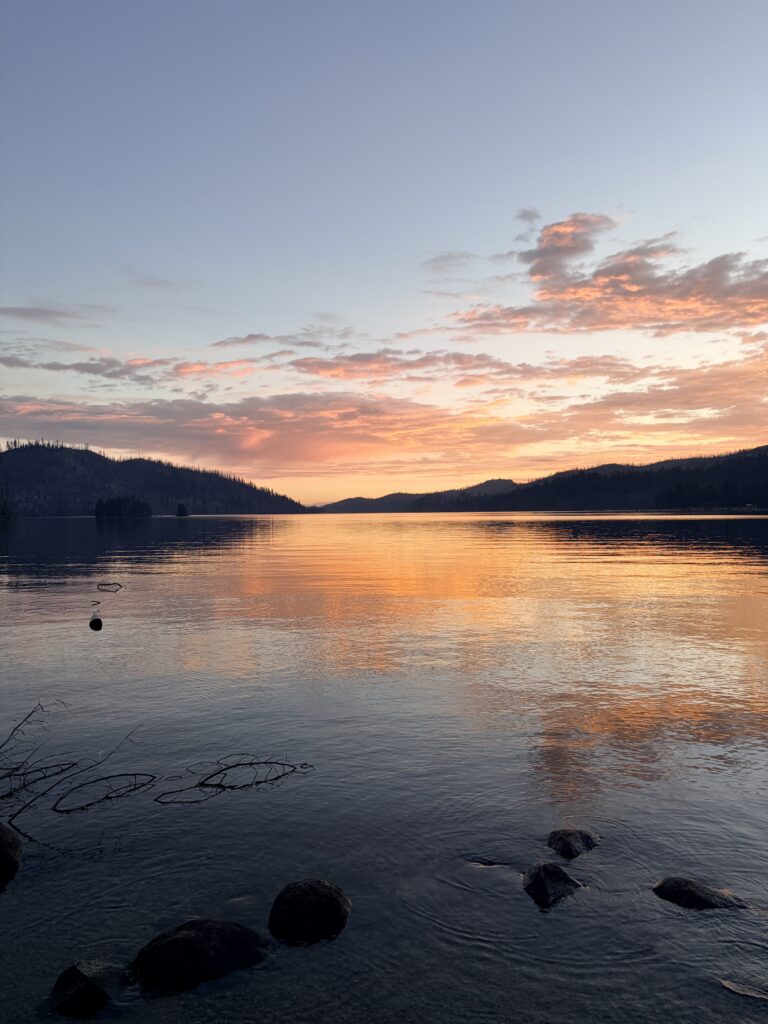
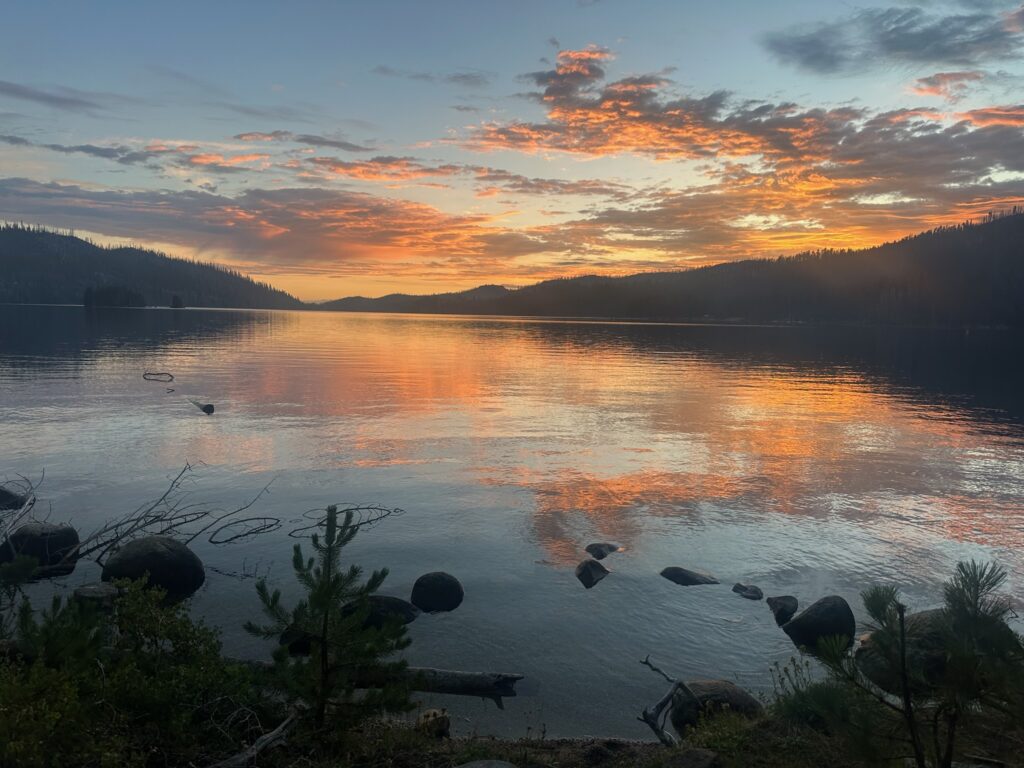
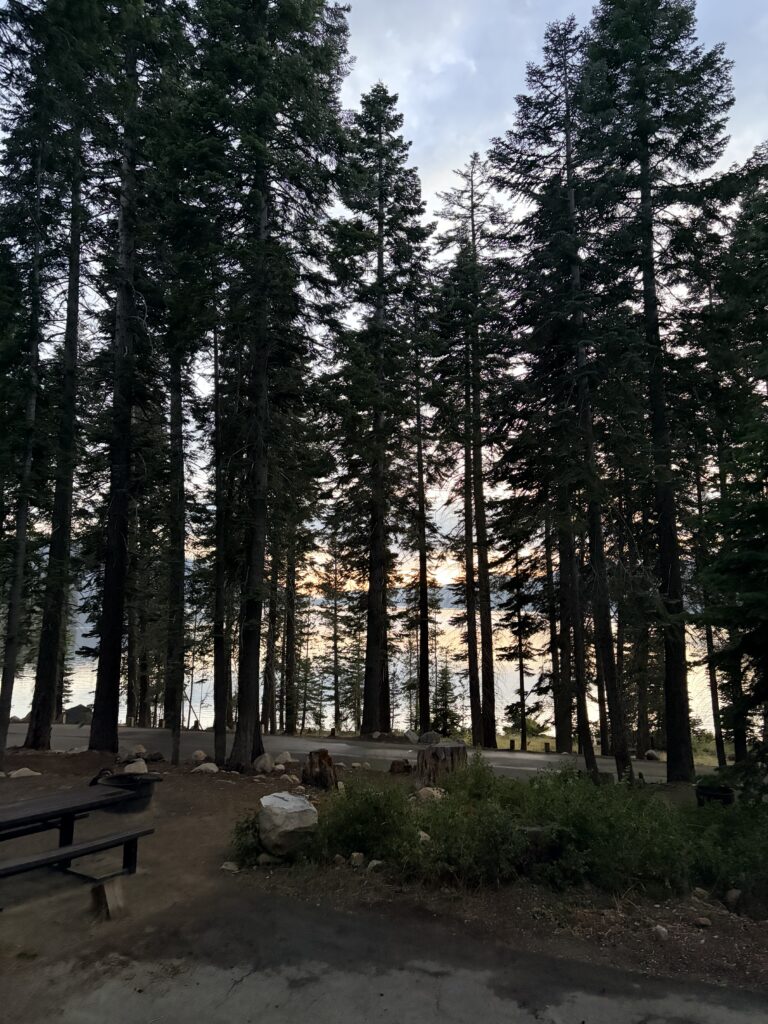
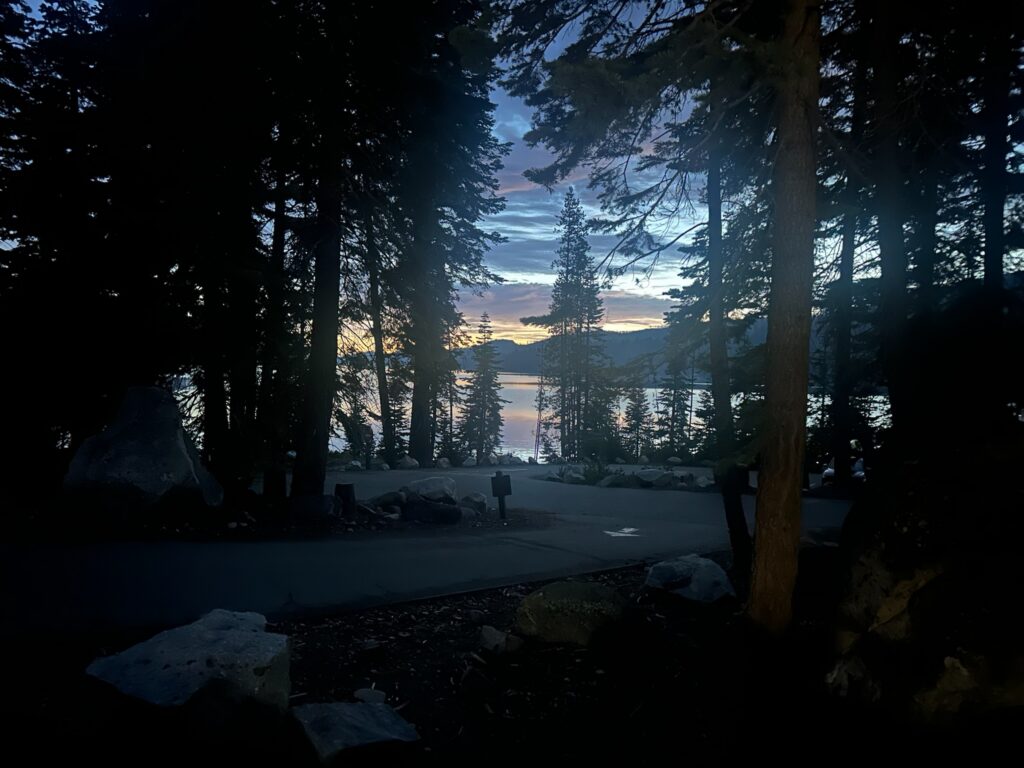
This actually was way faster than we thought! We arrived at 7:00 pm and it was raining (yikes- just a drizzle though). Luckily, the rain let up, and it led to some amazing sunset views! We couldn’t check in the whole trip- this was a challenge. The place was closed, then some newbie workers pointed us to the wrong place, and on the last day we finally found it- only to discover the workers went out for a break. Free registration, I guess? We already paid- it just saved me the $30 fee of my extra car.
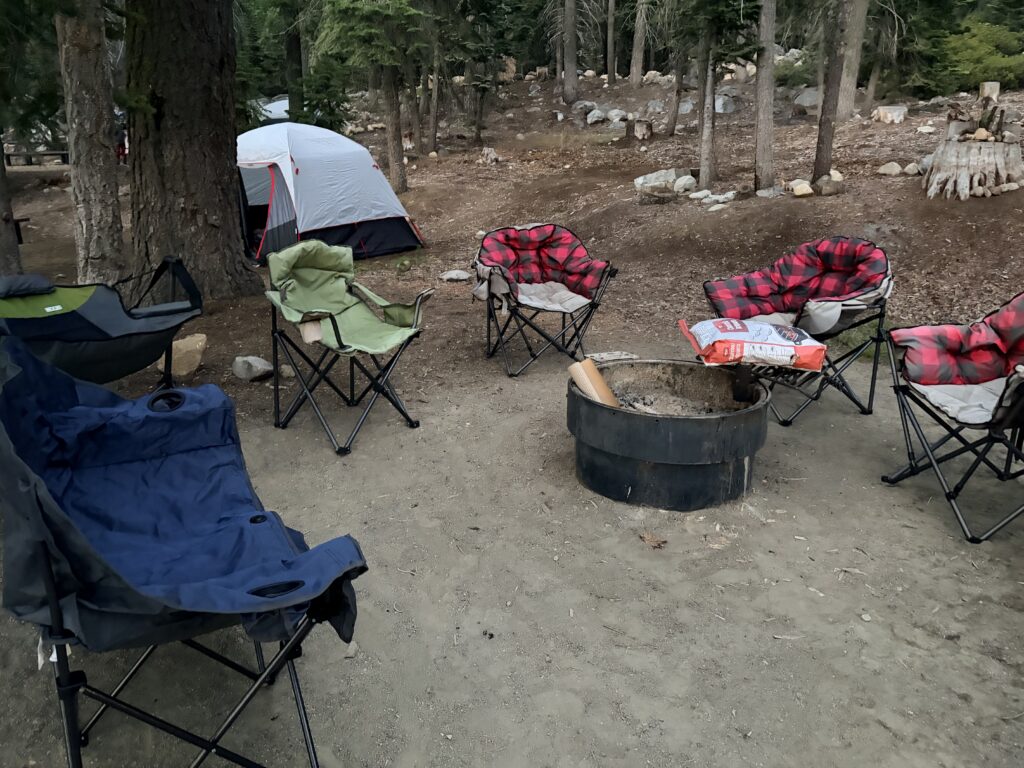
 Camping chairs around the fire are so necessary imo
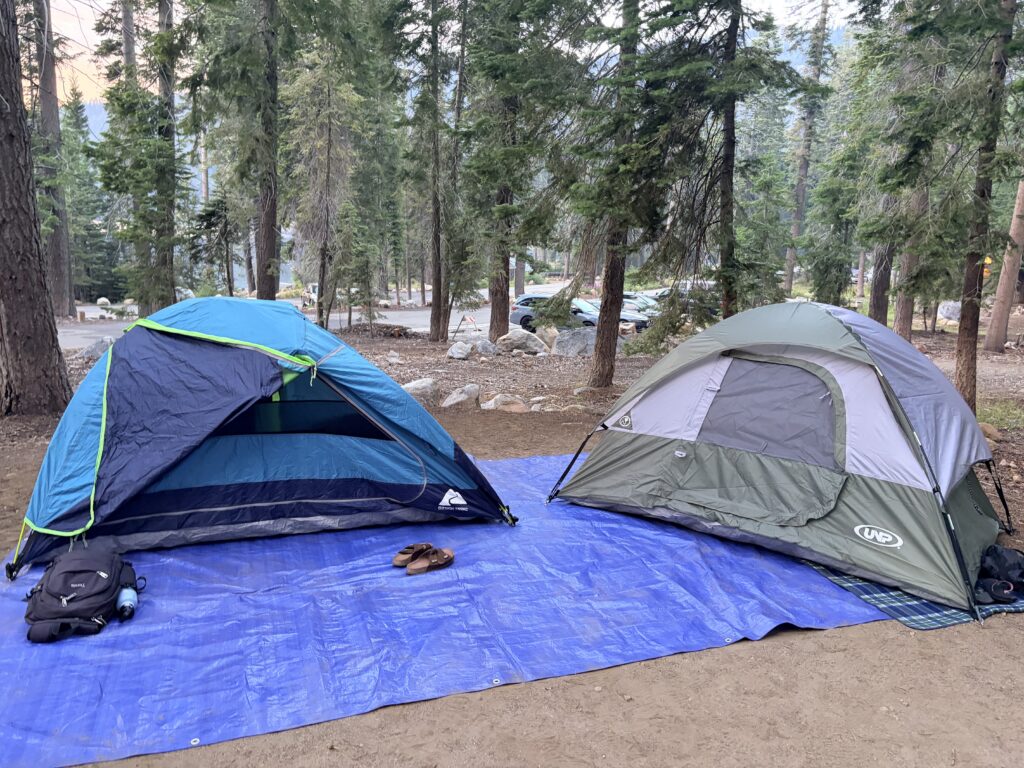
- Shockingly, the cheap amazon tent was super easy to set up and worked great!
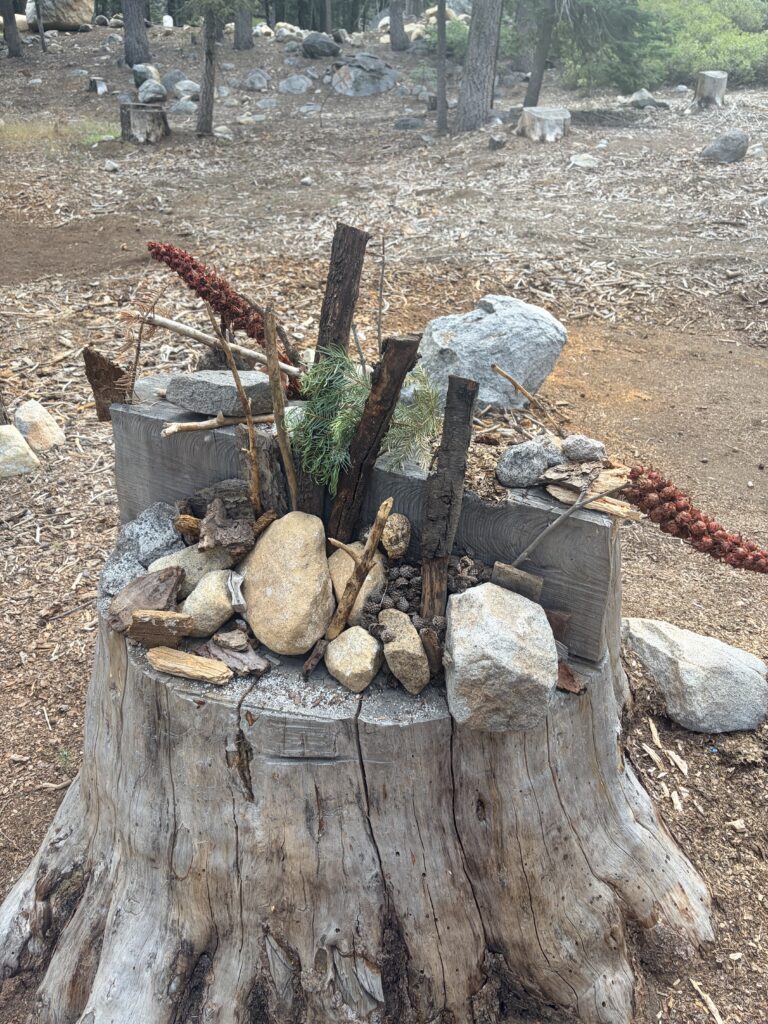
- A shrine (one of two) we found in our campsite. Yellowjackets, anyone?
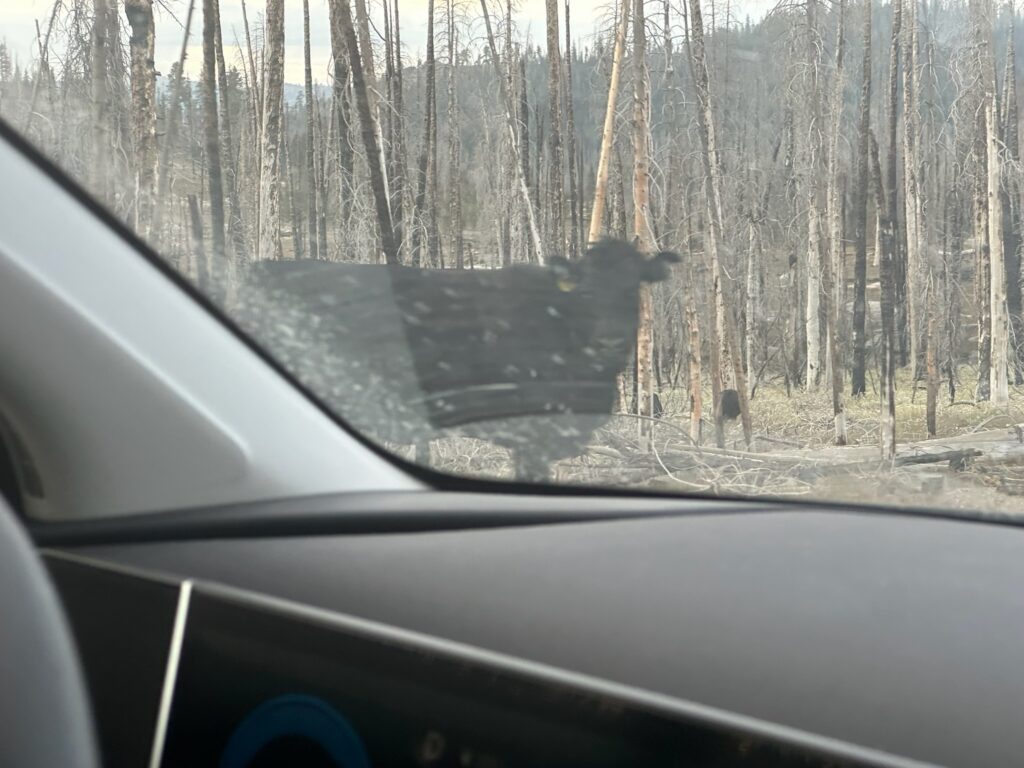
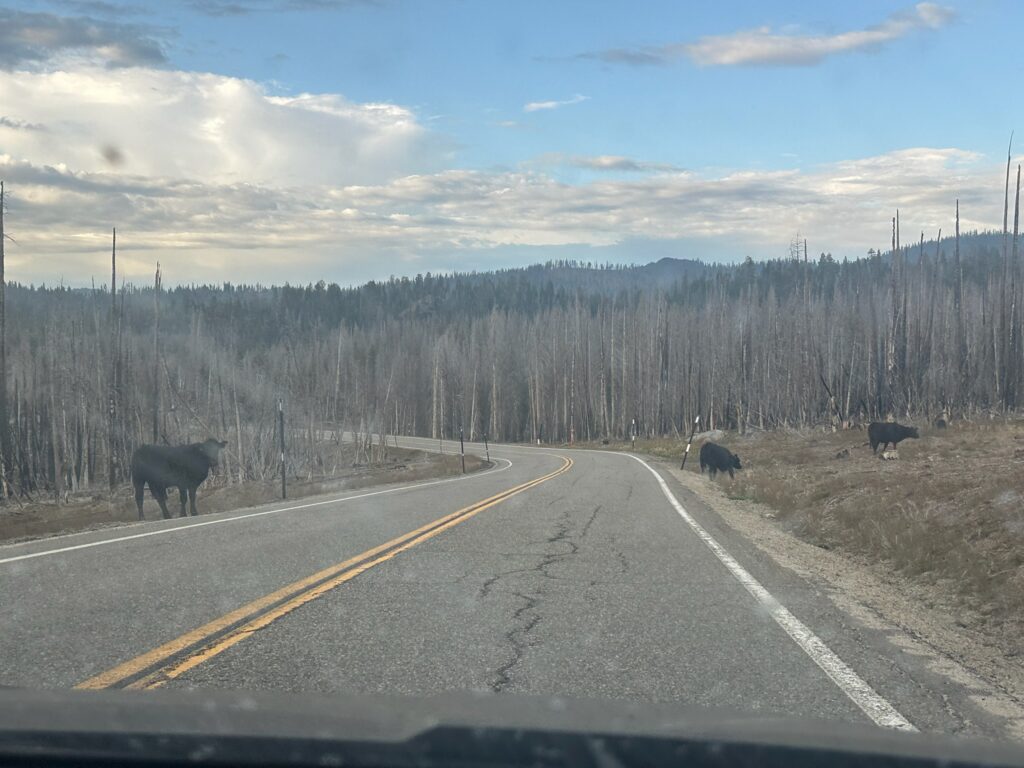
- Ominous cow says moo
- Fire burned trees
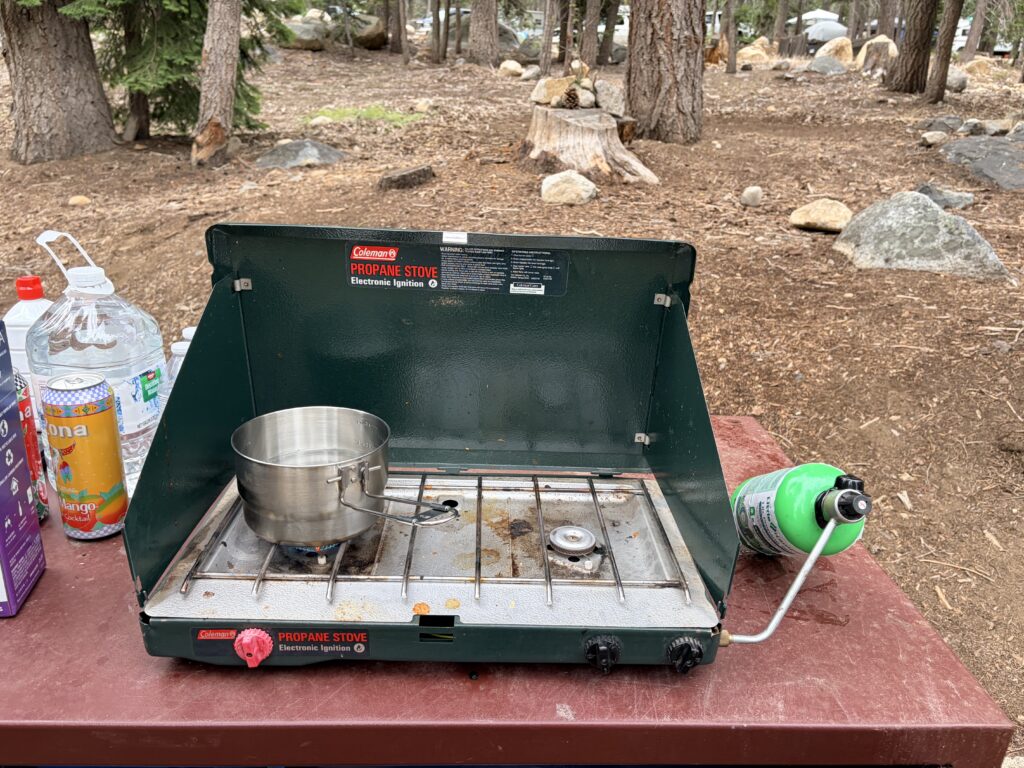
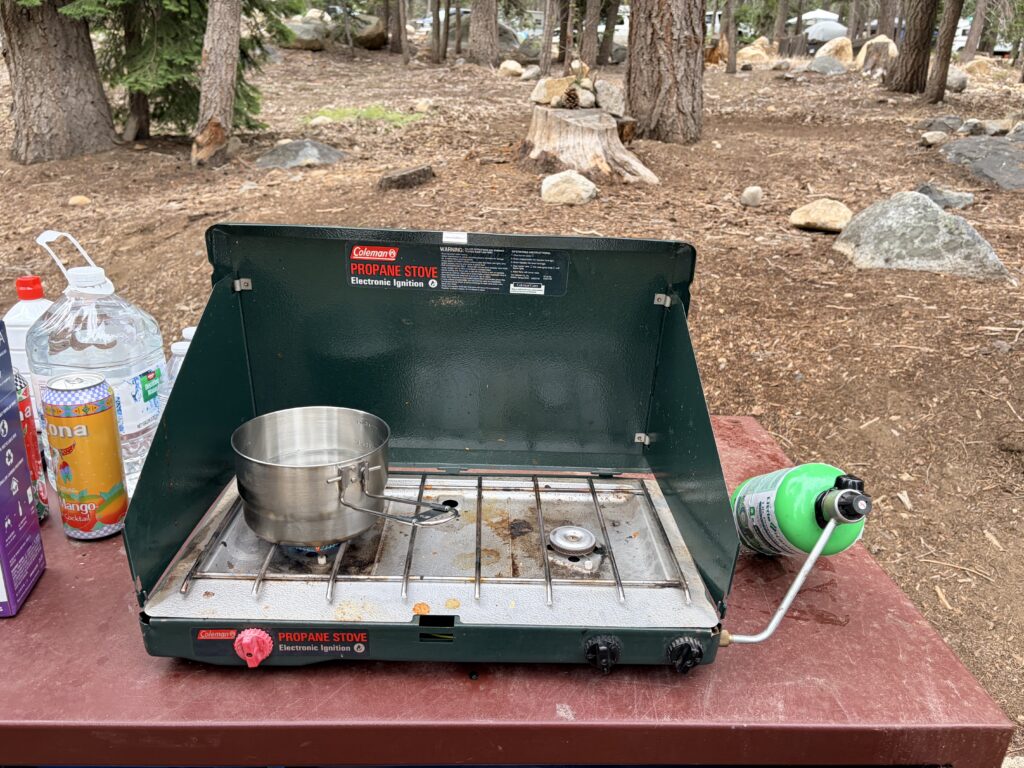
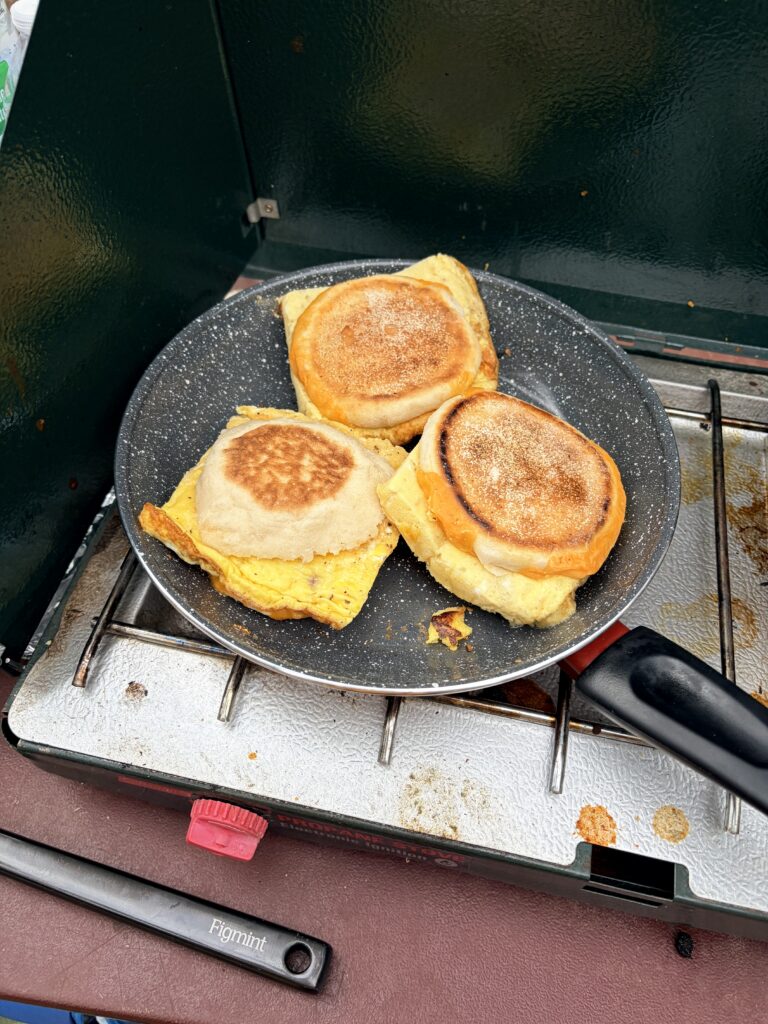
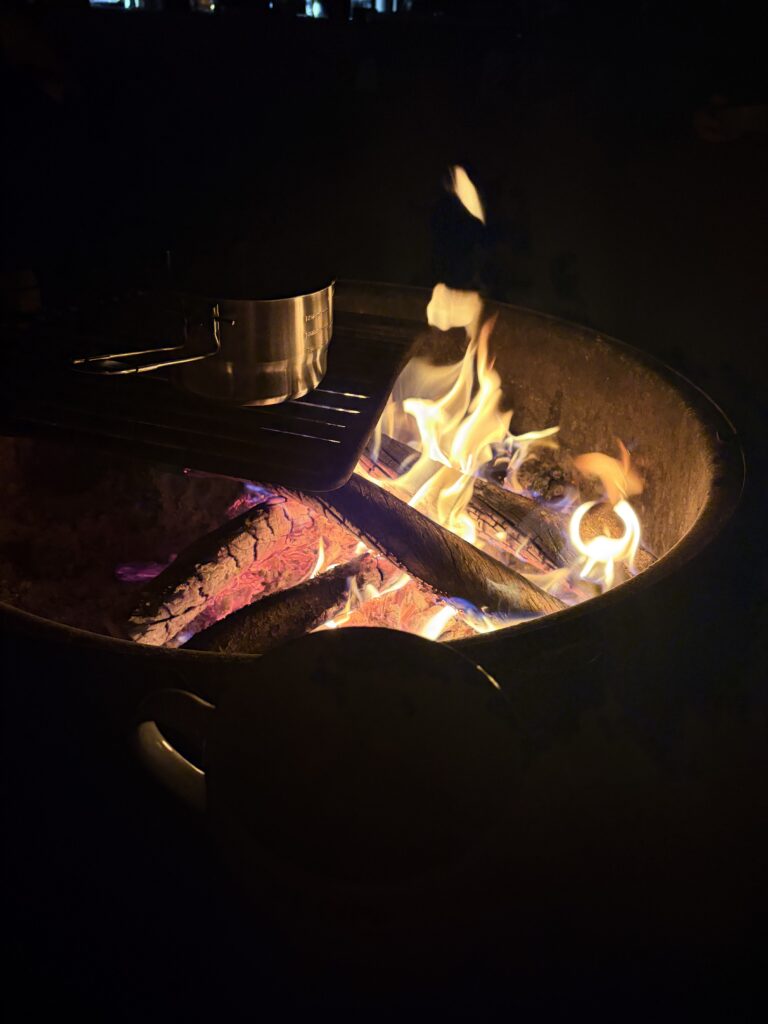
- Thank goodness for a camp stove!
What there is to do?
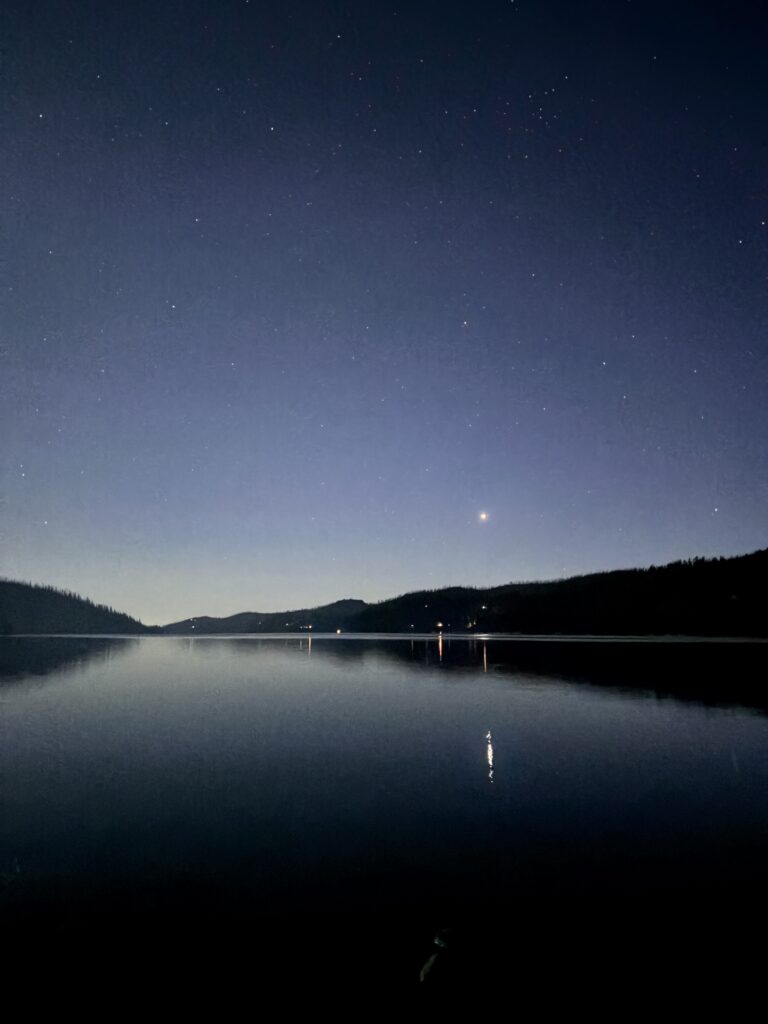
The lake itself is built for swimming, sailing, boating, canoeing, kayaking, fishing, and water skiing, and the surrounding area connects to hiking trails into the Kaiser Wilderness for anyone who wants to go further afield.
On clear nights, the lack of light pollution makes it an easy, rewarding spot for stargazing, a stargazing app on your phone turns “look at all those stars” into “that’s Jupiter, actually.” Birdwatching in the early morning is its own quiet reward too, and an ID app that identifies calls or matches wingspans makes it far more satisfying than just guessing.
If you’re driving up from the south, the Sierra Vista Scenic Byway (Highway 168) makes for a genuinely pretty 84-mile route, worth treating as part of the trip rather than just the way there.
Other things to do:
- Swim in the lake
- Hiking
- Collect sticks and rocks
- Hide and go seek?
- Tag
- Leaf rubbings using crayons and paper.
- Ghost stories
- Frisbee
- Photo challenge (ex morning light or a bug or best meal)
- Make girl scout patches with felt
- Grounding/Earthing: Take off your shoes. Stand barefoot on the soil to feel the earth beneath you.
- Stargazing
- Scrying in the lake or tarot
- Morning/sunrise gratitude ritual
- Hug a tree
The lake itself
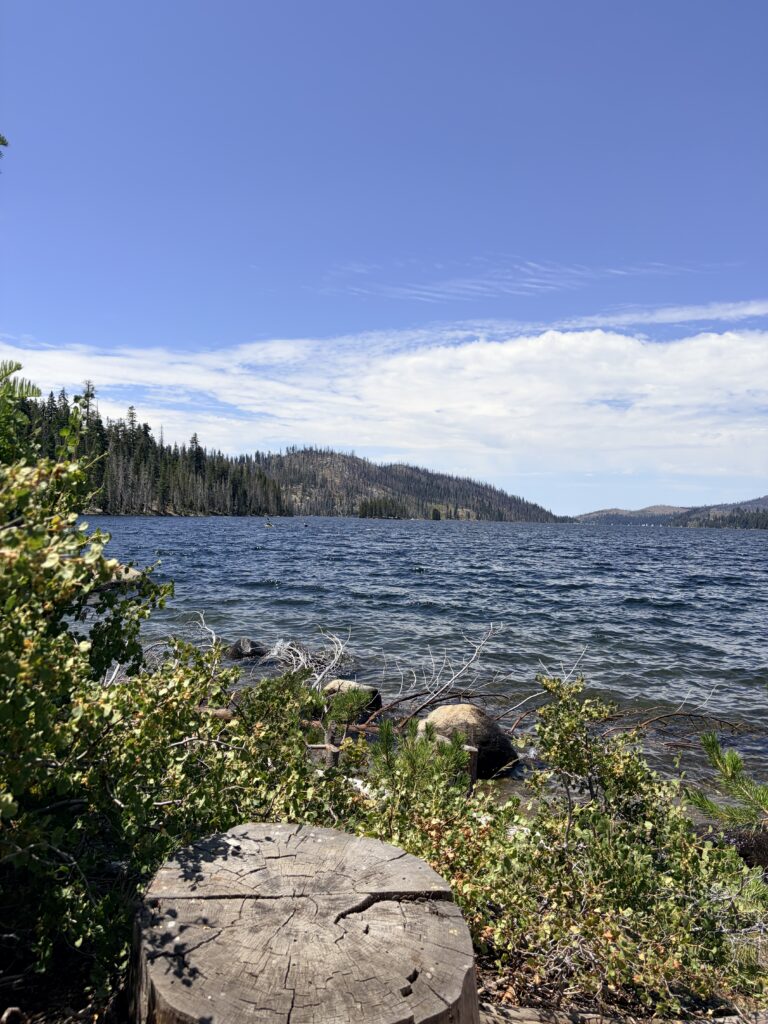
Kayaking in Huntington Lake felt like something out of The Odyssey, all that stabbing, lunging motion through cold, beautiful water. Then you get out, dry off in the sun, and somehow you’re eating a rich, gooey marshmallow sandwiched in chocolate and crunchy graham cracker within the hour. Ten out of ten. Doing it again.
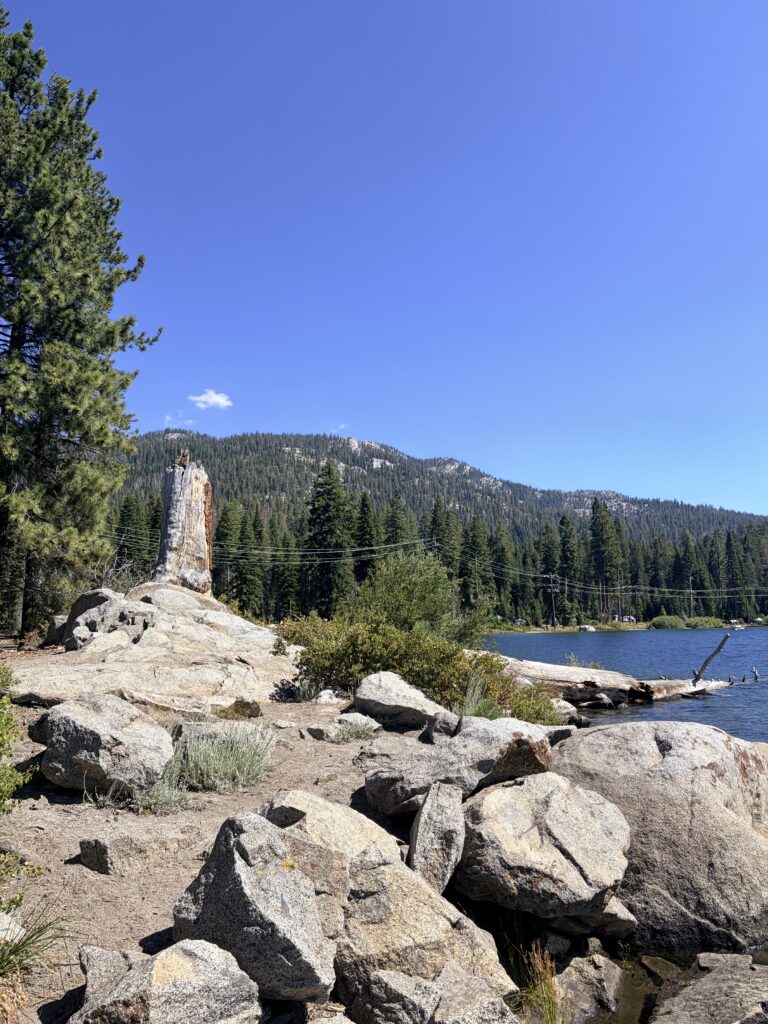
The lake shore is rocky in a lot of spots, so regular flip flops are a hazard. Ugh wish I had thought to buy some Crocs, Tevas, or any closed-back sandal that won’t slide off mid-step. Do it- your feet will thank you.
Da Food
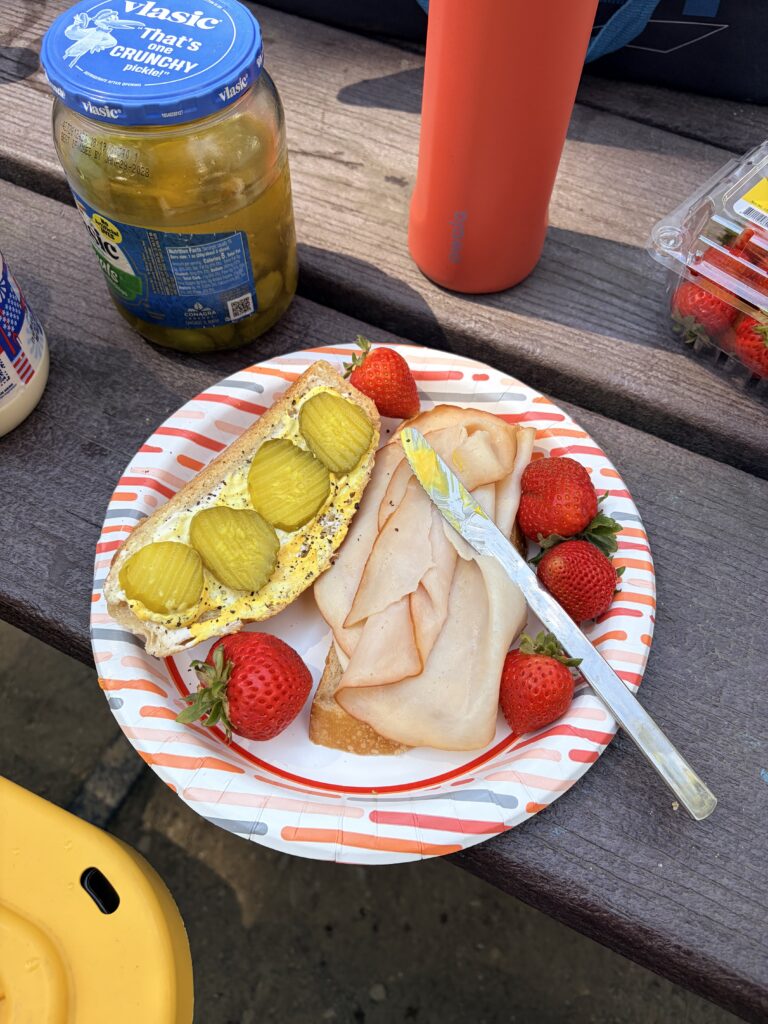
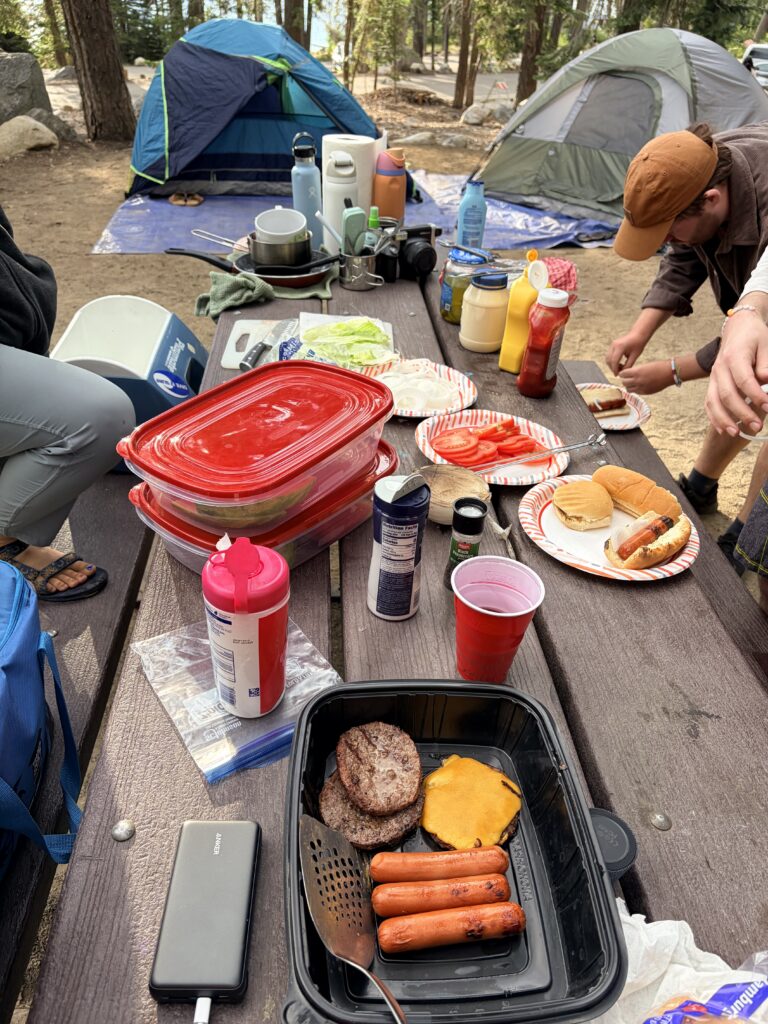
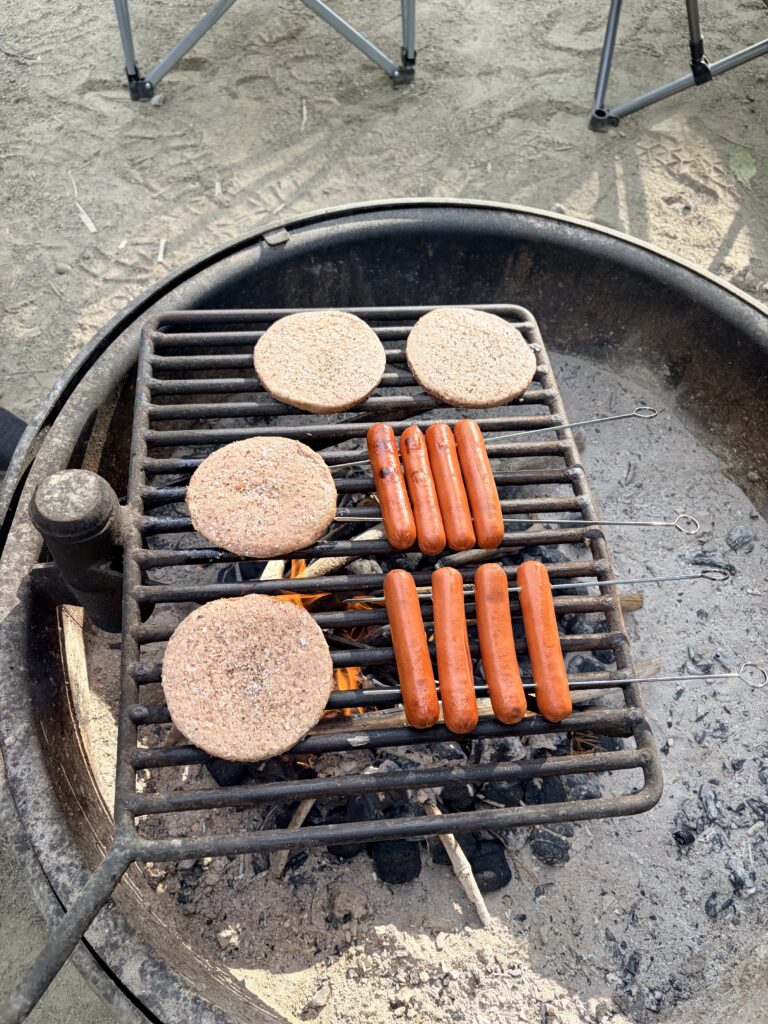
We went to Winco to grab groceries beforehand as it’s way easier to split the receipt and not buy doubles of things: hot cocoa, cinnamon buns and muffins, instant coffee and creamer, watermelon, peaches, strawberries, green grapes, salmon and asparagus, burgers and hot dogs and all the fixins, s’mores makings, and sandwich ingredients (turkey, ham, and chicken). Plus I made breakfast sandwiches beforehand, frozen, and heated those up on the camp stove. We bought way too much, but it was tasty!
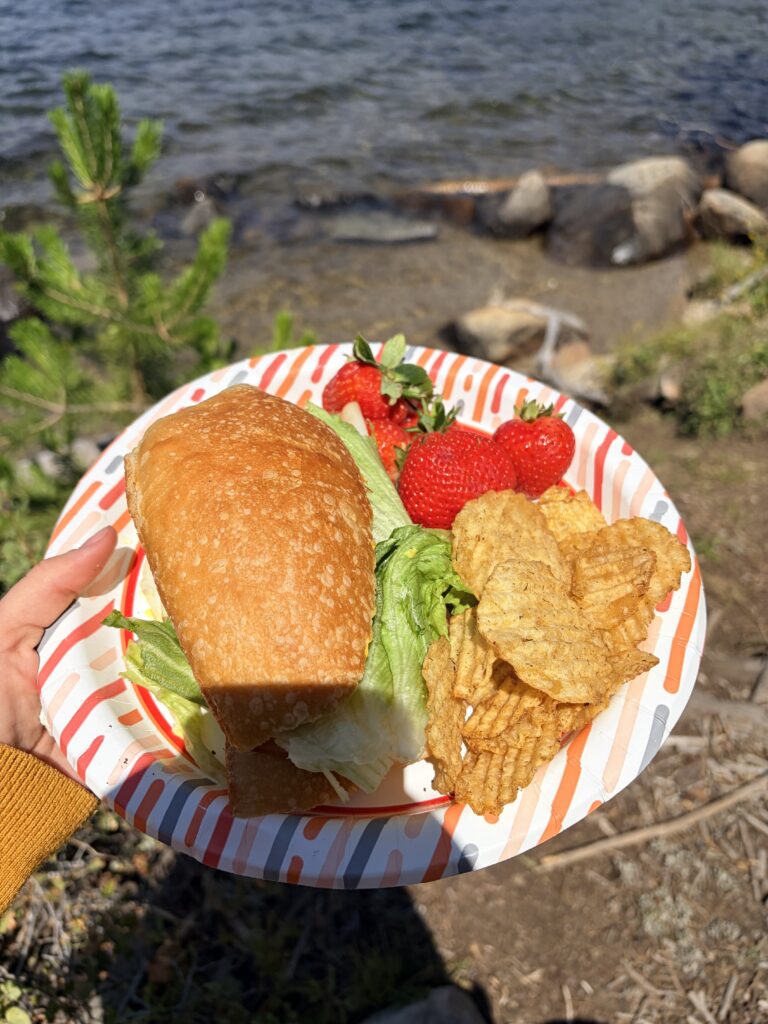
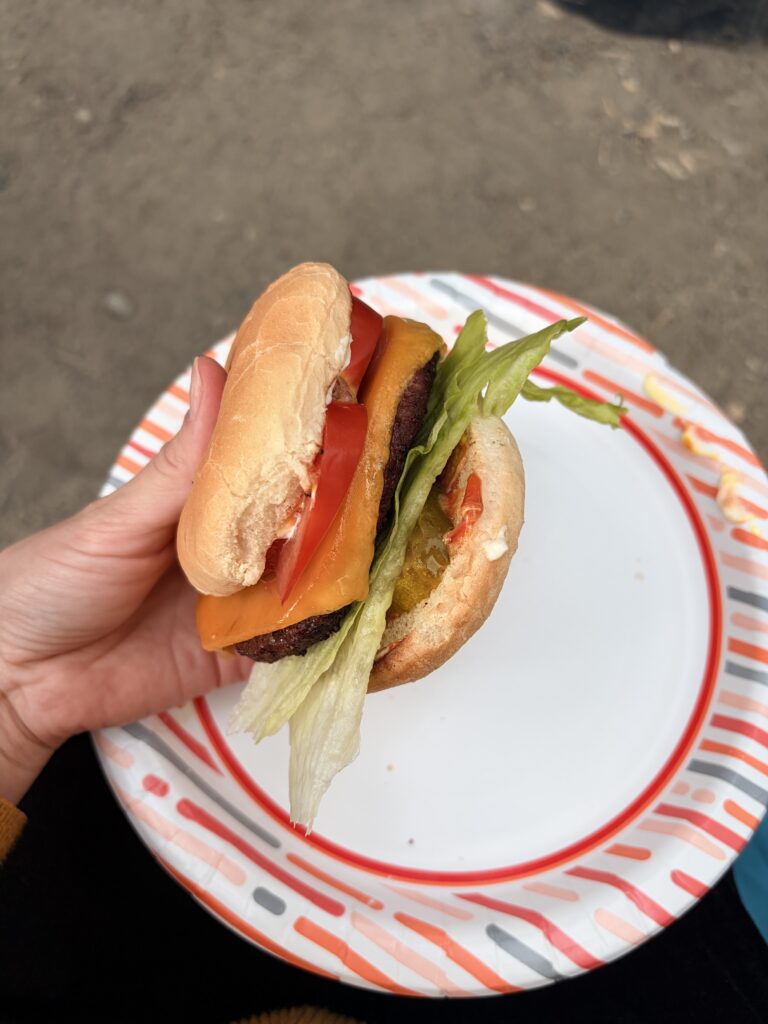
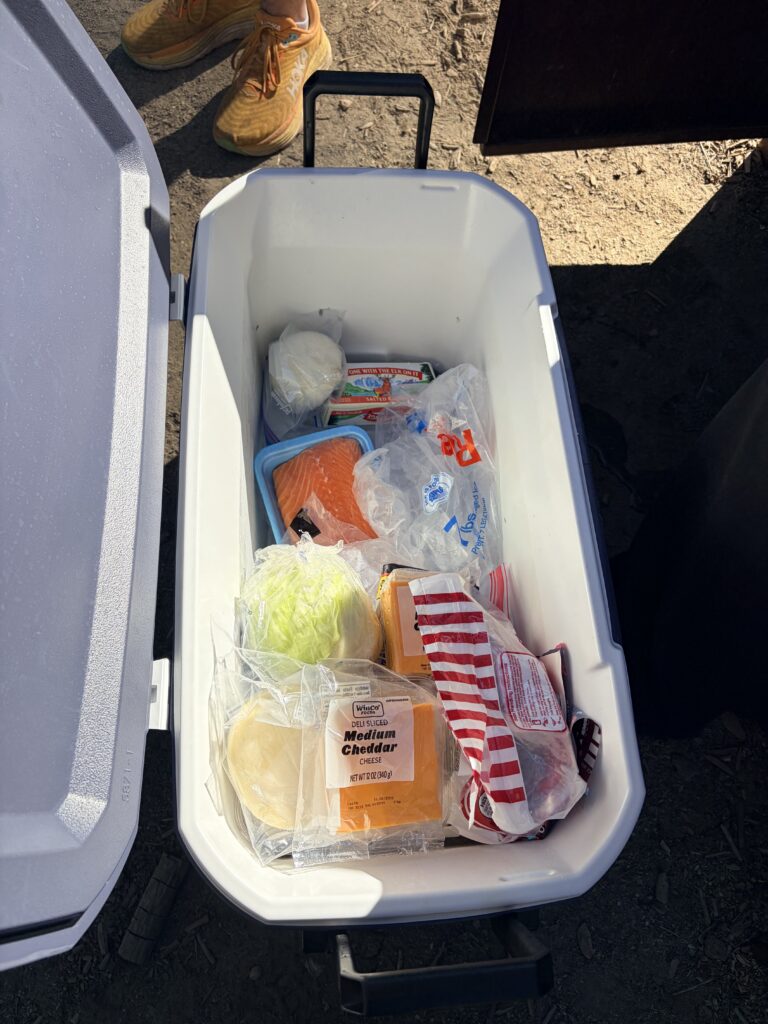
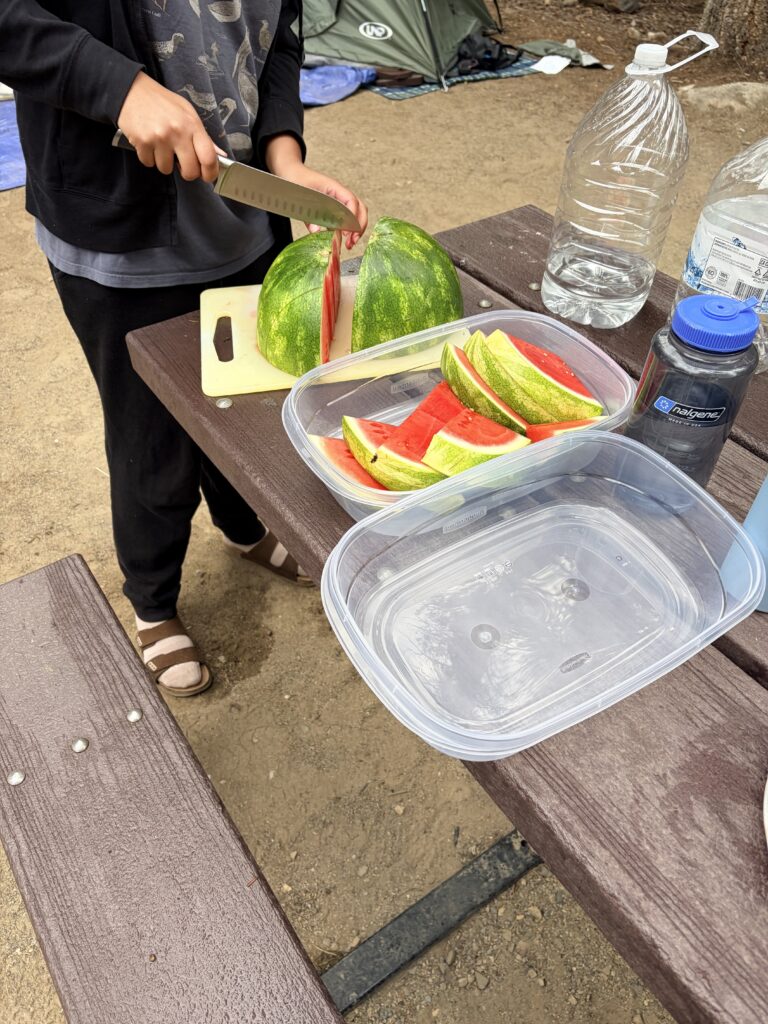
Hiking to a Waterfall
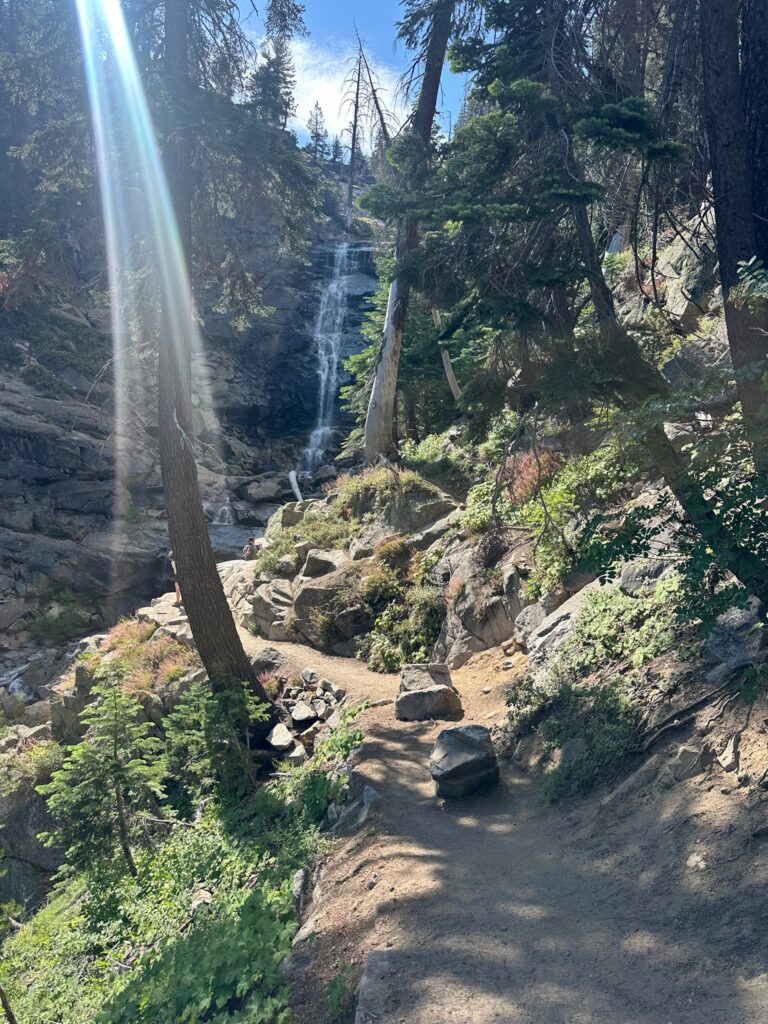
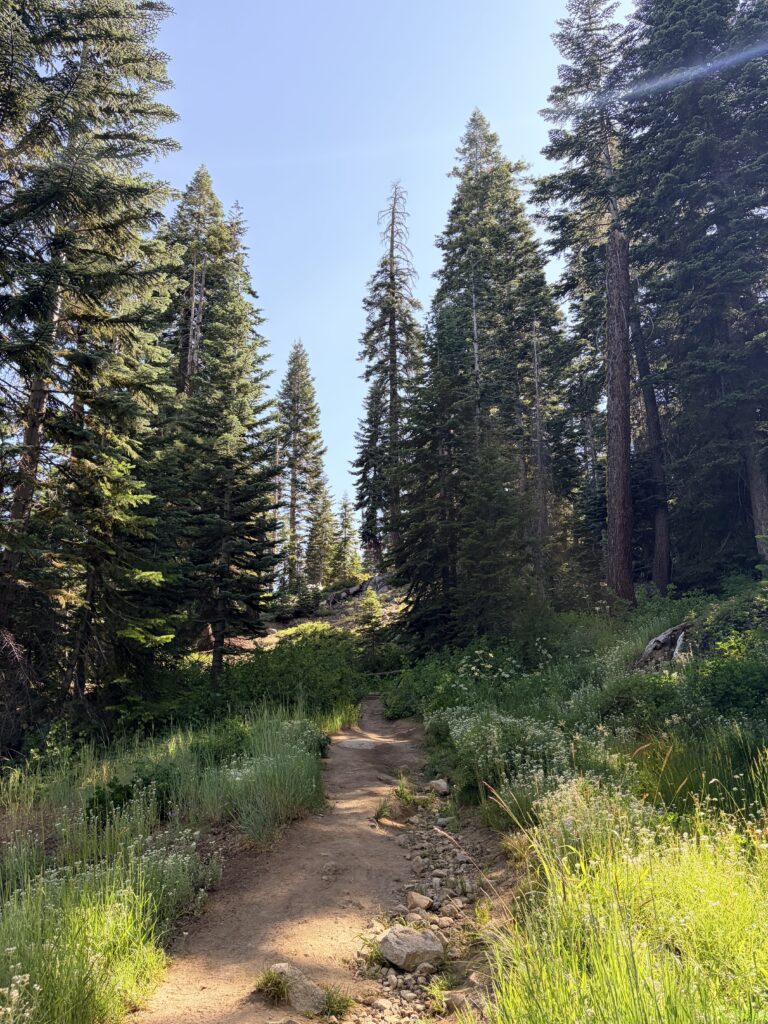
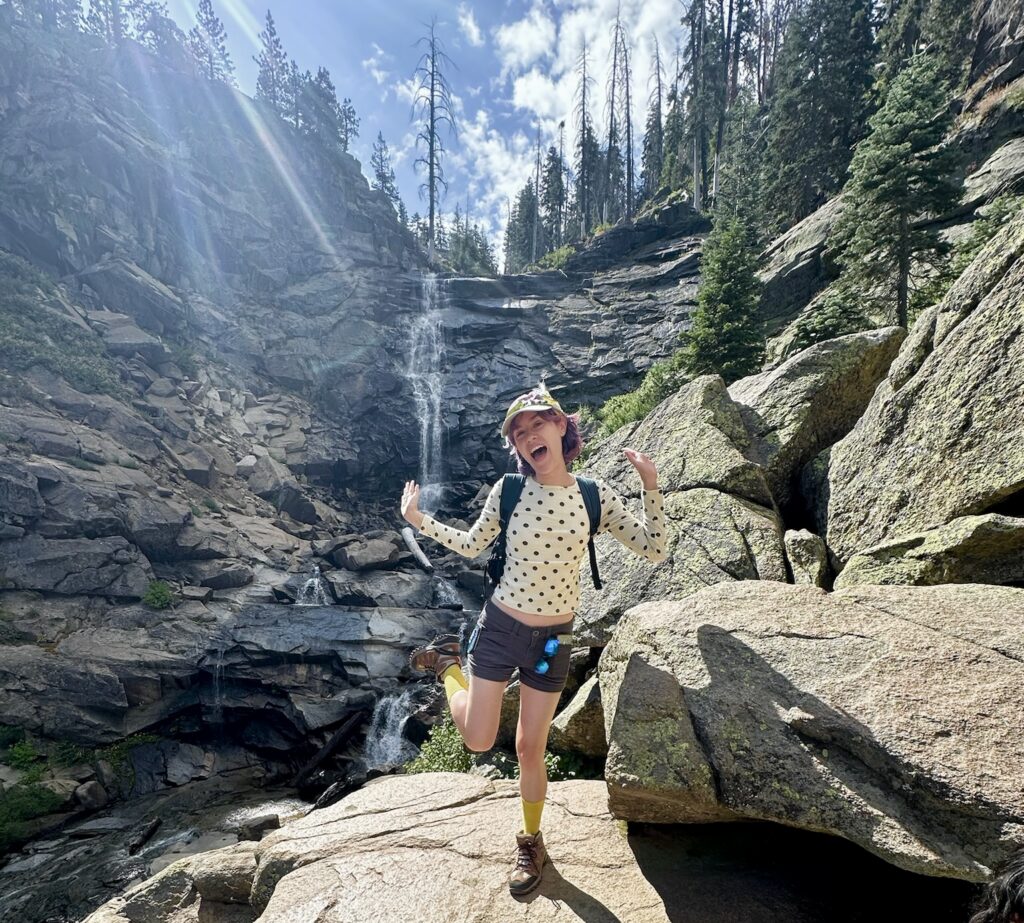
The next morning, we drove up (LOTS OF POTHOLES WOOPS very much unpaved road) to a trail that took us ten minutes to walk to a waterfall! How amazing!
The bug bite mystery
Several friends got absolutely destroyed by bugs on this trip. One friend doused herself in bug spray and still got eaten alive. Meanwhile, I skipped the spray entirely (it’s never worked for me anyway) and came away almost bite-free, along with two other lucky souls.
My working theory: garlic and onions, plus whatever genetic lottery ticket I apparently won. Is this science? Absolutely not. But there’s actually a real phenomenon here worth knowing about.
Fun fact: researchers have found that mosquito attraction really does vary person to person, and it’s tied to body chemistry, specifically the mix of odors your skin bacteria produce. Some people are just less appealing to mosquitoes than others, no spray required. The garlic thing is folk wisdom more than proven science, but the “some people just don’t get bitten” part is very real.
Fun Crafts!
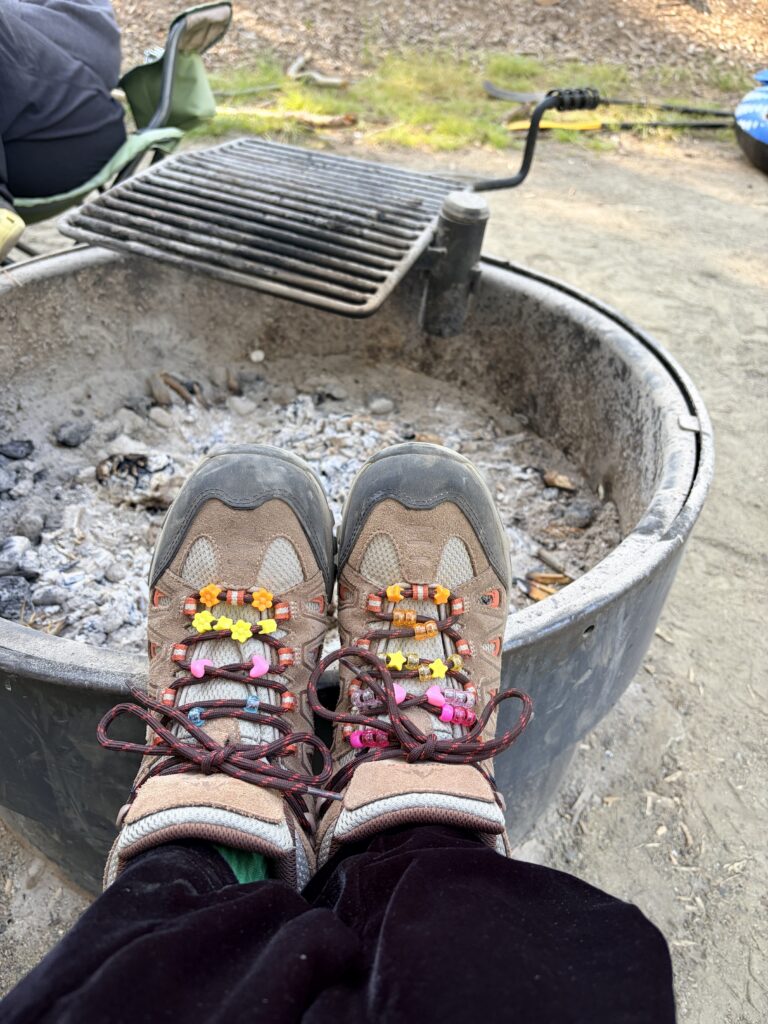
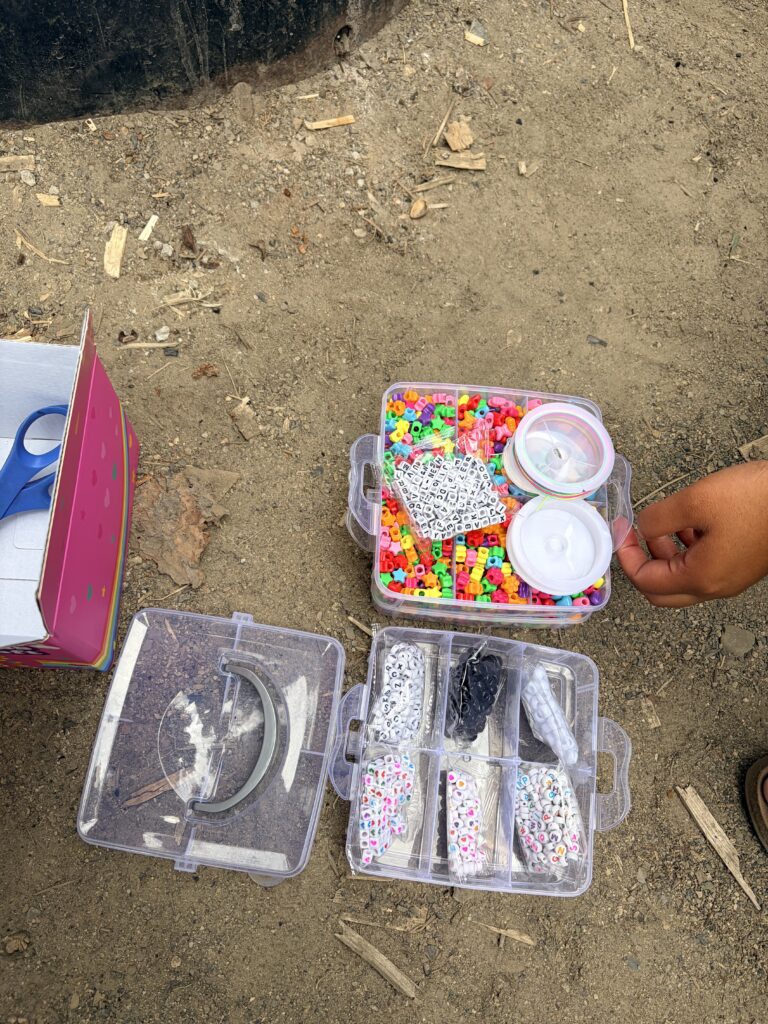
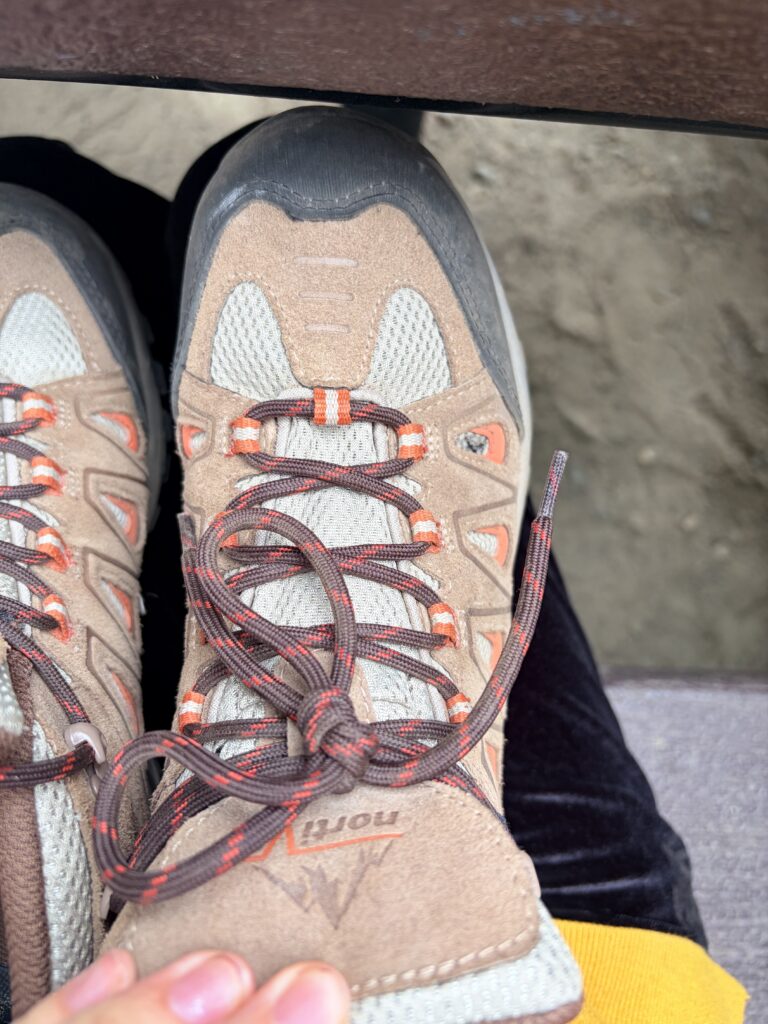
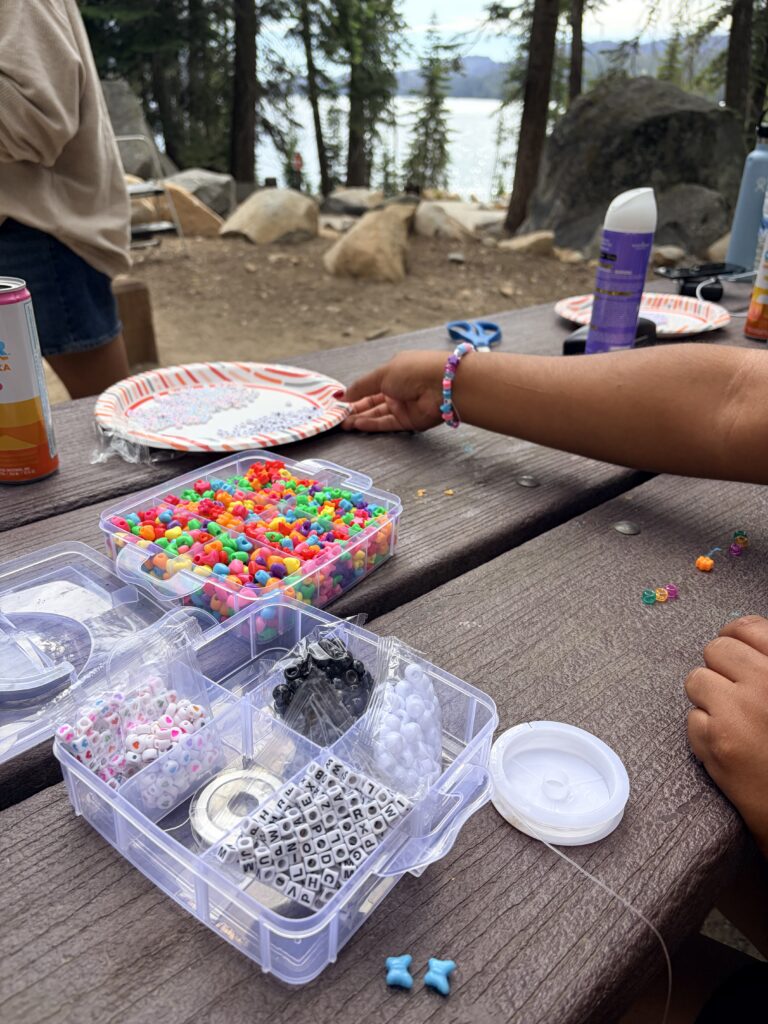
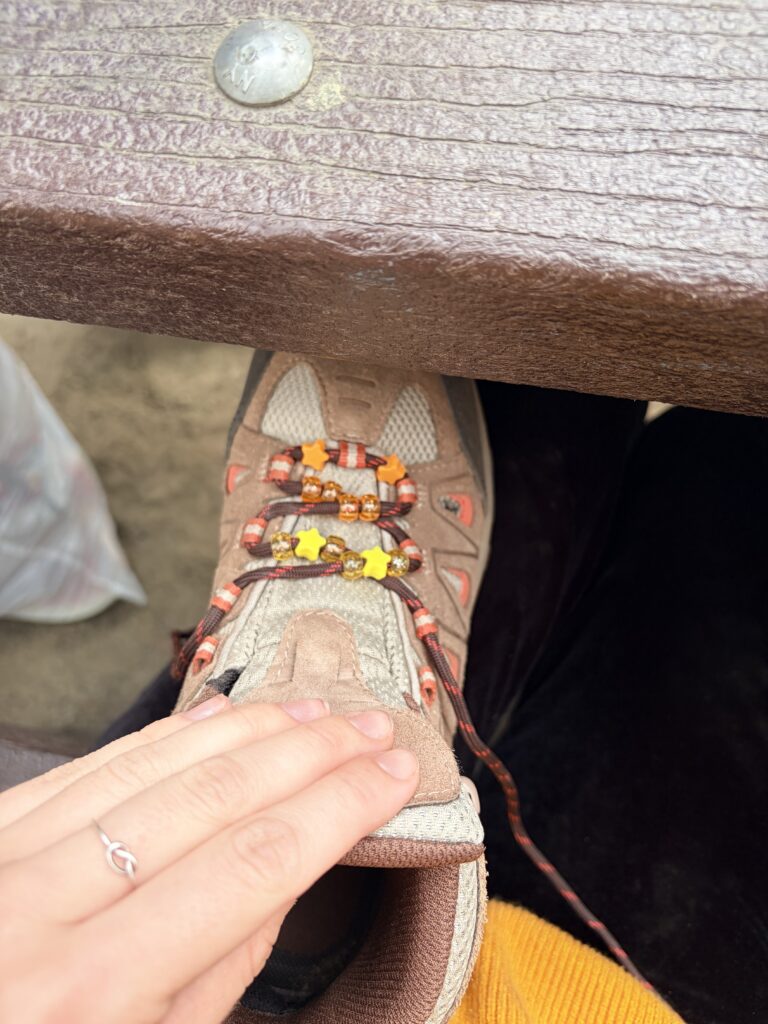
I brought up pony beads and we all made friendship bracelets! Also, I beaded my boots finally. Easy way to add whimsy to your camping!
Foraging for firewood
We gathered our own firewood by walking the immediate area (nothing more than about a 10 minute walk out and back), rather than buying bundled wood. Felt very self-sufficient and also just a nice way to explore the campsite’s surroundings.
Pack a lighter and matches for next time. Somehow this always gets forgotten until you’re standing over a pile of foraged sticks with nothing to light them.
Da Night Time
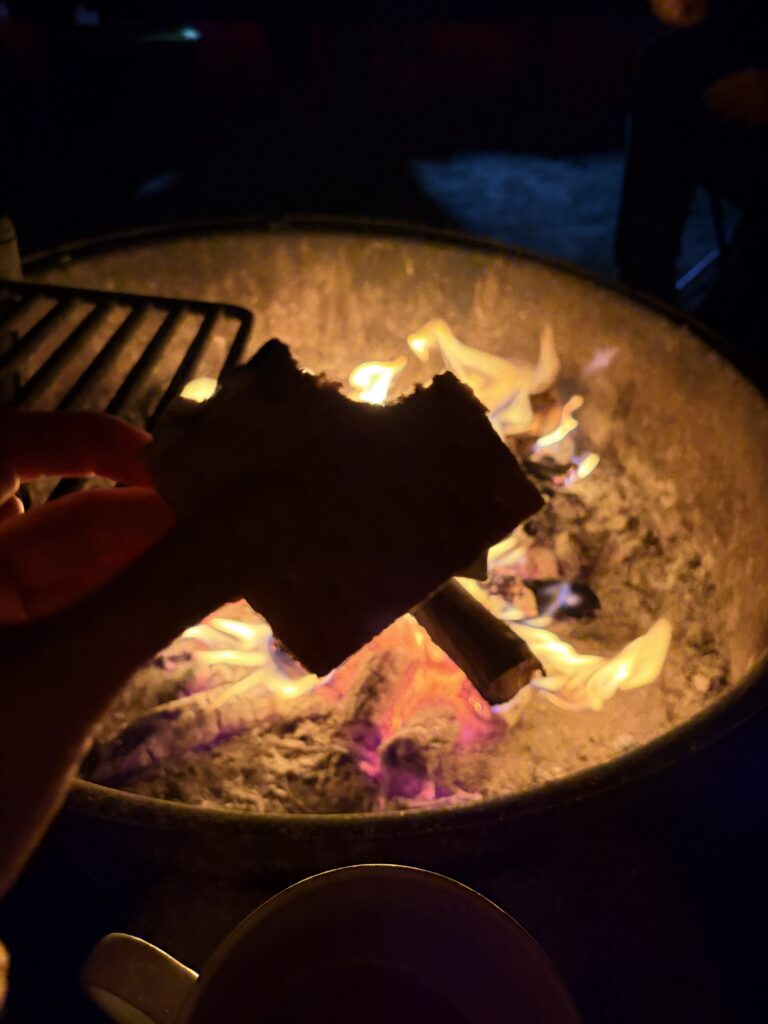
Favorite part of camping hands down: building a fire (it’s its own activity) and giggling with s’mores in hand. Also stargazing and telling scary stories. We discussed aliens this time.
Swear to god- as we watched the lake at night, we heard a splashing, and a full grown man head to toe in normal clothes comes stepping out of the lake, and lopes back up to the campground.
What.
The great registration kiosk chase
There’s a $10 fee for an additional vehicle, and my plan going in was simple: just pay it, so I could pack everything I wanted and be comfortable ($30 total for me). You’re supposed to pay at the site itself, and Google seems to think two cars per site are allowed anyway, with the extra fee tacked on per car.
Reality: the registration kiosk was closed every single time we tried, three separate attempts. The campground hosts on golf carts tried to help, but the first two sent us to the wrong spot entirely, and the third finally pointed us to the right kiosk, which was also closed. End result: I never actually got charged the fee. Lucky, I guess, in the same way the bug bites worked out in my favor.
If you’re bringing a second vehicle, plan to park in the overflow lot and walk to your site as a backup. Don’t count on the kiosk being staffed when you arrive, and don’t be surprised if the golf cart hosts send you in circles first.
Practical Tips Time!!
When to go
Most of the campgrounds around the lake, including Catavee, Kinnikinnick, Deer Creek, and Rancheria, run from June through October, which lines up with when the mountain actually thaws out and the road is fully clear. Peak season is July and August, when the water’s warm enough to swim without gasping and the wildflowers are out. If you can swing a shoulder-season trip in June or September, do it. Fewer crowds, still gorgeous, and the nights get that cold, clean mountain-air feeling.
A word on elevation: 7,000 feet is high enough that you will notice it. Hikes that would be easy at sea level turn into an exercise in heavy breathing and surprise. Give yourself a day to acclimate if you can, drink more water than feels necessary, and don’t be embarrassed about the extra rest stops. Everyone is a little out of breath up here.
Where to camp
There are several campgrounds directly on or near the lakeshore, each with a slightly different personality. Rancheria Campground, on the eastern end of the lake, is the largest at the lake with 125 campsites, and some of its tent-only sites require a short walk in from the car, so pack accordingly if you land one of those. Single-site fees across most of the lake’s campgrounds run in the $47 to $49 range, with a couple dollars more added on holiday weekends. Reservations open well in advance for summer weekends, so if you have dates in mind, book early rather than hoping for a walk-up spot.
A practical heads-up on vehicles: most sites charge an additional fee for a second car, generally around $10, payable at a site kiosk. In practice, those kiosks aren’t always staffed or open when you arrive, especially outside of peak check-in hours. Have a backup plan, like parking in an overflow area and walking your gear in, in case you can’t find anyone to pay.
What to pack
Beyond the obvious tent and sleeping bag, a few things make a real difference in comfort that we FORGOT to bring (so be better than us):
- A kettle, for boiling water fast, whether that’s for coffee, tea, or the easiest camp dinner there is
- Cup of noodles or similar, because minimal dishes is a genuine camping strategy, not a compromise
- Metal tongs, for handling anything on or near the fire
- Oven mitts, for grabbing hot pans and kettles off the grate
- An extra hoodie or layer, since mountain nights drop fast even after a hot afternoon
- Closed-back sandals like Crocs or Tevas, for the rocky sections of shoreline where flip-flops slide right off
- A lighter and matches, ideally more than one of each, because somehow this is the item everyone forgets
If you’re missing anything last minute, an REI run beforehand is worth it, and grabbing a refillable propane tank instead of a disposable one is a small, easy way to cut down on waste.
Firewood and fire safety
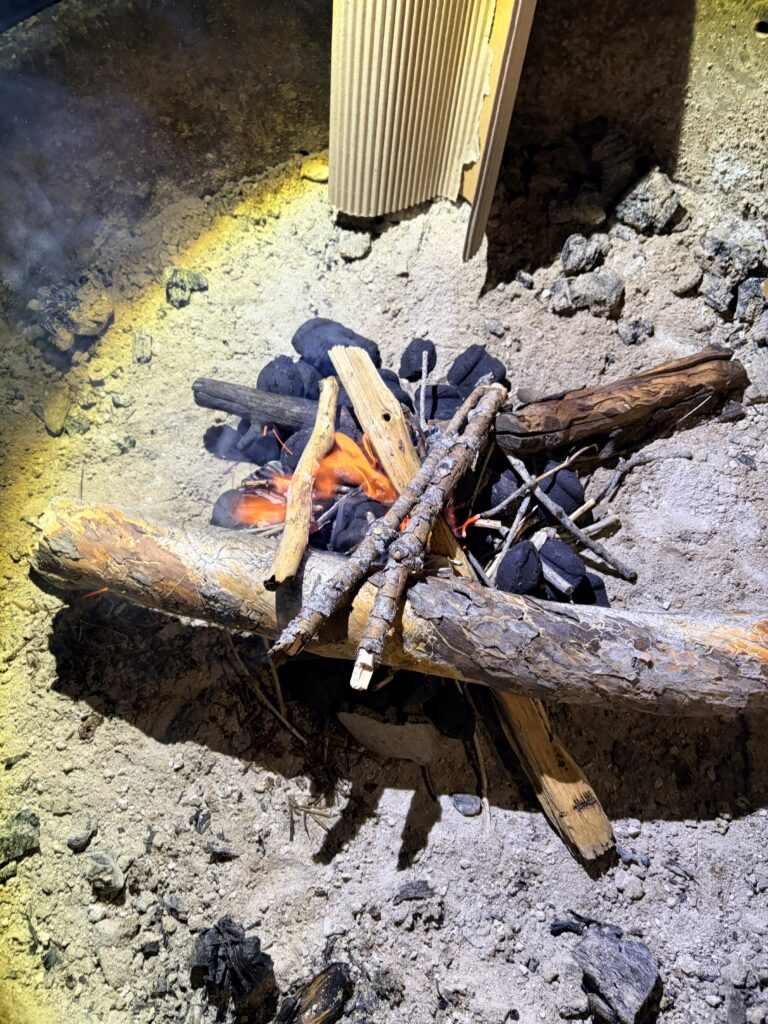
Sierra National Forest asks campers to be bear aware, keeping all food out of sight in approved containers or locked inside a vehicle, and removing food from the area after eating. It’s a real practice, not a suggestion, since a fed bear becomes a repeat visitor.
If you want to forage for your own firewood rather than buying bundled wood at a camp store, you totally can! Stick close to your site (a short walk, nothing deep into the forest) is both easier and gentler on the surrounding area. And do check for any fire restrictions before your trip. California adjusts campfire rules season to season depending on conditions, so a quick call to the ranger station or a check of the forest’s current alerts is worth the two minutes.
One more thing worth carrying with you mentally: if you drive through sections of blackened, charcoal tree trunks on the way in, that’s not always a tragedy in progress. Fire is a natural and necessary part of forest renewal in California’s forests, and some conifers even depend on fire’s heat to release their seeds. Controlled and seasonal burns are a normal, expected part of how these ecosystems function, a practice with roots in indigenous land management long before it had a name like “controlled burn.”
The gear list: what worked, what’s missing
Camp cooking runs a lot smoother with the right small stuff. Here’s what we used and what’s going on the list for next time:
- Oven mitts
- Extra plates
- Metal tongs (adding this before the next trip, we felt the absence)
- Sleeping bag
- An extra hoodie (mountain nights don’t care what season it is down in the valley)
- A kettle for boiling water
- Cup of noodles: cheap, easy, and basically dish-free. Less dishes is always the win.
If you need to restock or replace gear, REI is the move, and grab a refillable/exchangeable propane tank instead of the disposable kind. Better for the wallet and better for not adding to a pile of empty canisters.
Apps that make you look smarter than you are
Two app recommendations from this trip:
- Merlin/Sky Guide-style stargazing app (“Sky Guide” or similar) for pointing at the sky and identifying stars, planets, and constellations on the spot. The moon was just over half full while we were out there, which made for good enough light to walk around camp without a flashlight but still plenty of stars.
- A birding app (something like Merlin Bird ID, aka the “learn birds by their wingspan and call” app) for identifying who’s making all that noise in the trees at 6am.
The charcoal trees
Driving past all the blackened, charcoal tree trunks on the way in and out is a little jarring if you’re not used to it. But it’s worth remembering: fire is a normal, necessary part of forest renewal, especially in California. Controlled and seasonal burns are supposed to happen. It’s obviously bad when fire threatens people or property, but outside of that, burn cycles are just part of how these ecosystems have always worked, the way indigenous land management practiced for a long time before it became “controlled burns” on a calendar.
Fun fact: many California conifers, like lodgepole and knobcone pine, actually have cones that only open and release seeds after they’ve been exposed to the heat of a fire. The charcoal trunks you’re driving past aren’t just damage, they’re often the setup for the next generation of forest.
No internet, and the accidental screen detox
Turns out going without internet for a few days didn’t change much for me personally. The only thing I really wanted it for was texting people, and even that I could live without. What actually worked better than any willpower: being so physically tired by the end of each day that I had zero energy left to fall into a YouTube hole.
If you’re trying to cut down on screen time and “just don’t look at your phone” isn’t working, here’s the actual workaround: fill your day with something so consuming (a hike, a run, whatever wipes you out) that by the time you’d normally be scrolling, you’re already asleep instead.
The general vibe
Expect to lose cell service. Expect a slow-moving RV or two on the two-lane road up, and plenty of turnouts to let them by, so there’s no need to rush. Expect bug spray to work great on some people and not at all on others, for reasons that have more to do with your particular body chemistry than anything you’re doing wrong. And expect that after a full day of hiking, swimming, and fire-building, you’ll be too pleasantly exhausted to miss your phone much at all.
That’s really the whole pitch. Thin air, cold water, hot marshmallows, and a stretch of forest that’s been renewing itself, fire and all, long before any of us showed up to camp in it.




I really enjoyed reading this article. It covered the topic in a way that was easy to understand and kept my attention all the way through.Thanks for sharing such useful information. I appreciate how everything was explained without making it feel too technical.